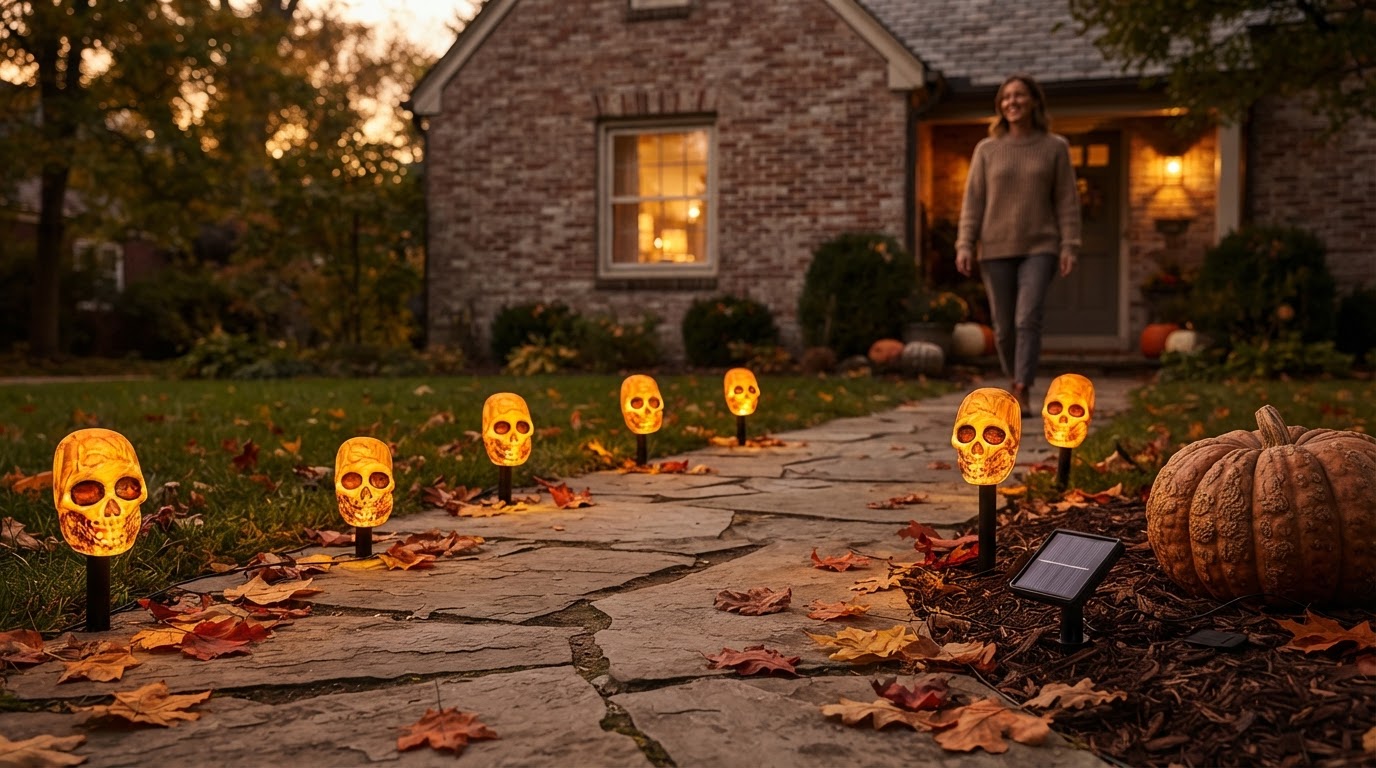
How do Solar Skull Stakes improve halloween pathway lights?
 Priya RamanSenior Analyst
August 20, 2026 — Solar Skull Stakes improve outdoor displays by combining autonomous photovoltaic charging with high-intensity LED illumination to create a maintenance-free, atmospheric pathway.
Property owners frequently seek methods to secure their walkways during the autumn season without the logistical burden of extension cords or manual timers. The shift toward sustainable, decorative lighting relies on the efficiency of the integrated solar cells to convert daylight into stored energy. Understanding how these components interact is essential for maintaining consistent visibility during the darker hours of October.
Think of it as a matrix of energy density and aesthetic distribution. To evaluate these systems, two axes matter here: the efficiency of the silicon panel and the lumen output of the internal LED. When these elements are balanced, the lighting provides both safety and thematic consistency for residential landscapes.
How does the sensor technology in Solar Skull Stakes work?
The sensor technology in Solar Skull Stakes utilizes a photoresistor to detect ambient light levels, automatically triggering the LED at dusk and deactivating it at dawn. This mechanism ensures that energy stored in the Ni-MH battery is preserved for when it is most needed, typically providing 6 to 8 hours of illumination. According to the product specifications for Solar Skull Stakes, the internal circuitry prevents overcharging, which extends the overall lifecycle of the internal battery during varying weather conditions. This autonomous operation is a significant upgrade from traditional battery-operated props that require manual intervention. For those concerned with long-term performance, [optimizing durability in Solar Skull Stakes](/blog/optimizing-durability-solar-skull-stakes) involves ensuring these sensors remain clear of debris to maintain accurate light detection.
Why are Solar Skull Stakes preferred for seasonal walkways?
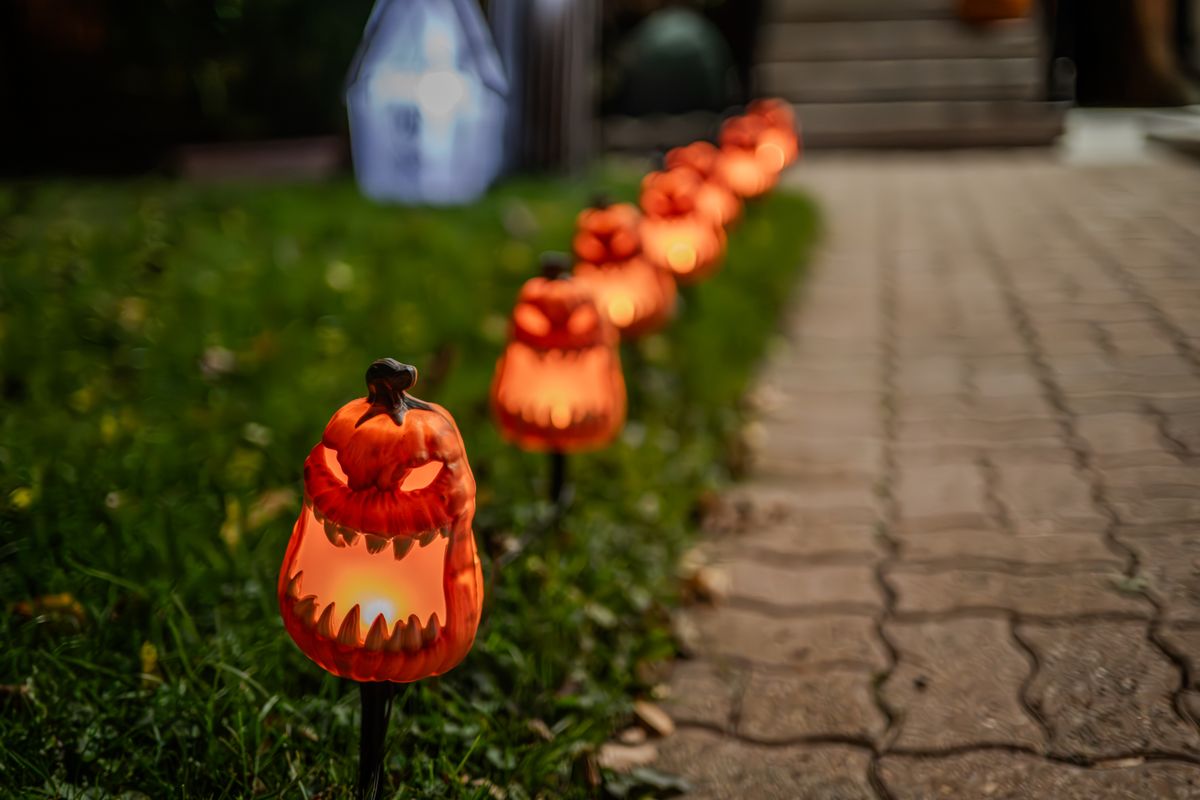
Photo by Héctor Berganza on Pexels
Solar Skull Stakes are preferred for seasonal walkways because they eliminate the trip hazards associated with power cables while providing a uniform light source that defines the physical boundaries of a path. The decision rule: if the installation area receives at least four hours of direct sunlight, solar-powered units offer a more reliable and safer alternative to plug-in decorations. By distributing light at the ground level, these stakes mitigate shadows that could hide uneven terrain. This benefit is further explored in the [Solar Skull Stakes evaluation for seasonal walkways](/blog/solar-skull-stakes-evaluation-seasonal-walkways), which highlights how the stake design allows for precise placement in soft earth or mulch. Furthermore, using solar powered skull path markers allows for modularity; users can add or remove units to accommodate changing landscape features without rewiring the entire system. Once you see it this way, the transition from wired to wireless decor becomes a matter of operational efficiency.
Quick answers
Photo by Constantine Kim on Pexels
Q: How long do Solar Skull Stakes take to charge? A: Under optimal conditions with direct sunlight, the internal battery reaches full capacity in approximately 6 to 8 hours. Cloud cover or shade from nearby structures may increase this duration.
Q: Can these lights withstand heavy rain during October? A: Solar Skull Stakes are designed with an IP44 or higher weather-resistance rating, meaning they are protected against water splashes from any direction. This makes them suitable for typical autumn weather patterns including light rain and frost.
Q: What is the average lifespan of the LED bulb? A: The LEDs used in these stakes are rated for approximately 10,000 to 20,000 hours of use. Since they only operate during dark hours, a single unit can last for multiple consecutive Halloween seasons.
Q: How deep should the stake be driven into the ground? A: For maximum stability, the stake should be inserted at least 4 to 5 inches into the soil. This prevents the skull housing from tilting or falling over during high winds, as detailed in the guide for outdoor solar halloween skeleton decor.
Learn more about Solar Skull Stakes at https://solyraskullstake.com.