Choosing Solar Skull Stakes for Path Lighting
 Sam VasquezBuying Guide Lead
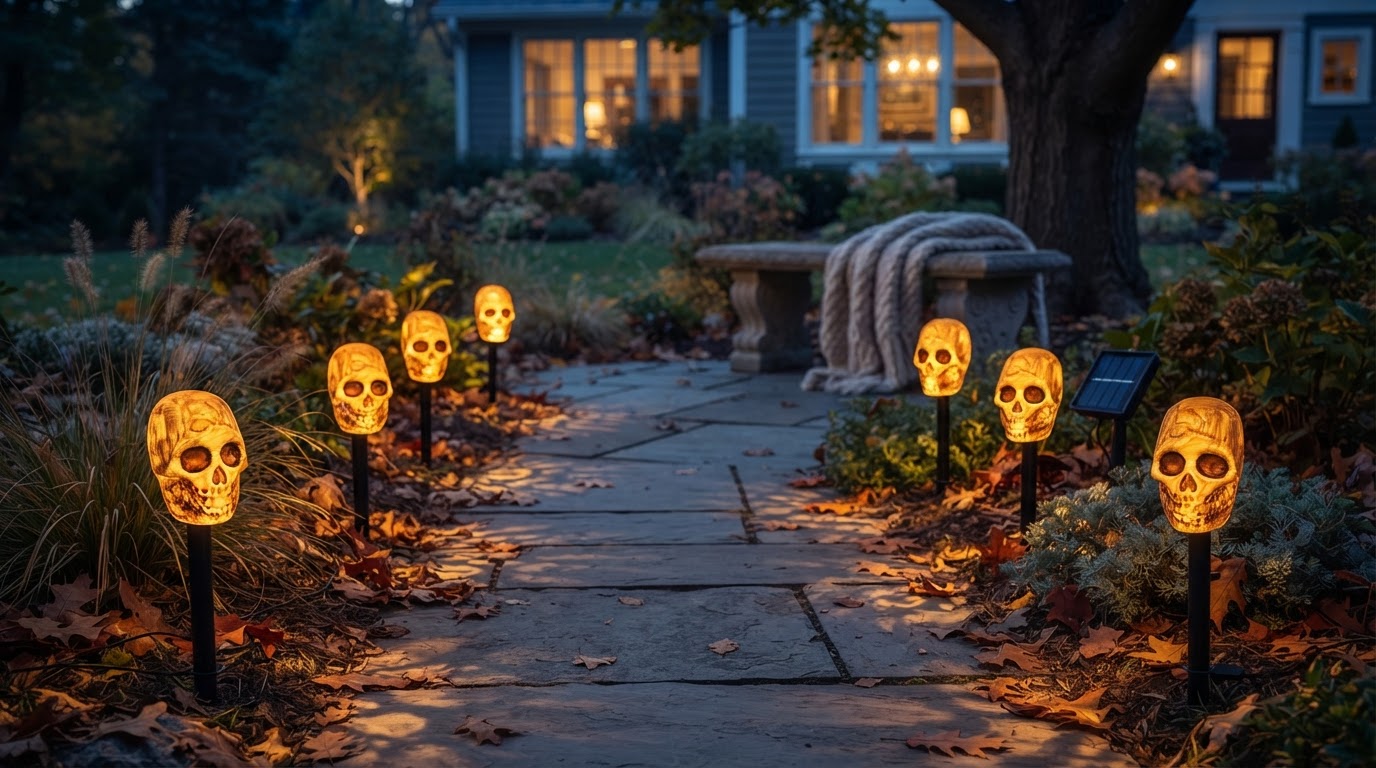
September 5, 2026 — The shift toward decorative solar lighting has moved beyond simple utility, with Solar Skull Stakes now serving as a primary choice for homeowners balancing seasonal aesthetics and pathway safety.
I have observed that modern landscape lighting is increasingly focused on autonomous operation, moving away from high-maintenance wired systems. According to the International Dark-Sky Association, the move toward shielded, low-lumen outdoor lighting helps reduce light pollution while providing enough illumination for safe navigation. Solar Skull Stakes fit this trend by offering localized, ground-level glow that marks boundaries without the harsh glare of traditional floodlights. When setting up a yard, the choice often comes down to whether you want a permanent fixture or a themed marker that can withstand the elements during peak seasonal use.
The Three-Point Path Evaluation
Photo by joao Guerreiro on Pexels
When I look at path markers, I evaluate them based on three specific criteria: light dispersion, ground stability, and weather resistance. Standard plastic solar markers often utilize a basic 1.2V Ni-MH battery and provide roughly 5 lumens of light, which is sufficient for basic visibility but lacks character. In contrast, Solar Skull Stakes are designed with a textured resin housing that diffuses the LED light, creating a softer, more atmospheric glow that fills the immediate surrounding area rather than just pointing a beam at the ground. Between these two, I’d go with the skull stakes if you are looking to create a specific mood for a walkway. The resin construction typically offers better impact resistance than the thin plastic used in budget-tier markers, which is critical if you are [maintaining seasonal solar skull stakes in high-traffic yards](/blog/solar-skull-stakes-maintenance-guide). If you’re on a budget and just need pure utility, a 10-pack of generic stakes might suffice, but you lose the aesthetic weight and durability that a dedicated decorative stake provides. I also find that the stake length matters; a longer stake provides better stability in loose garden soil, preventing the common "leaning" issue seen with shorter, top-heavy models.
Expert tip: To maximize the runtime of your path markers, ensure the solar panel is wiped clean of morning dew or dust weekly, as even a thin layer of grime can reduce charging efficiency by up to 30%.
Here’s what I’d actually buy: for a standard front walkway, I prefer the Solar Skull Stakes because the integrated [led skull landscape lighting](/blog/led-skull-landscape-lighting-review) provides a distinct visual boundary that standard white LEDs cannot match. Skip this if your path is in a permanent shadow, as no amount of quality engineering can overcome a lack of direct sunlight. You should also consider how these units integrate with other themed elements, such as skeleton head garden stakes solar, to ensure a uniform look. Understanding [skull garden lights solar performance](/blog/skull-garden-lights-solar-performance) is essential before committing to a full-yard installation, especially if you live in northern latitudes with shorter daylight hours.