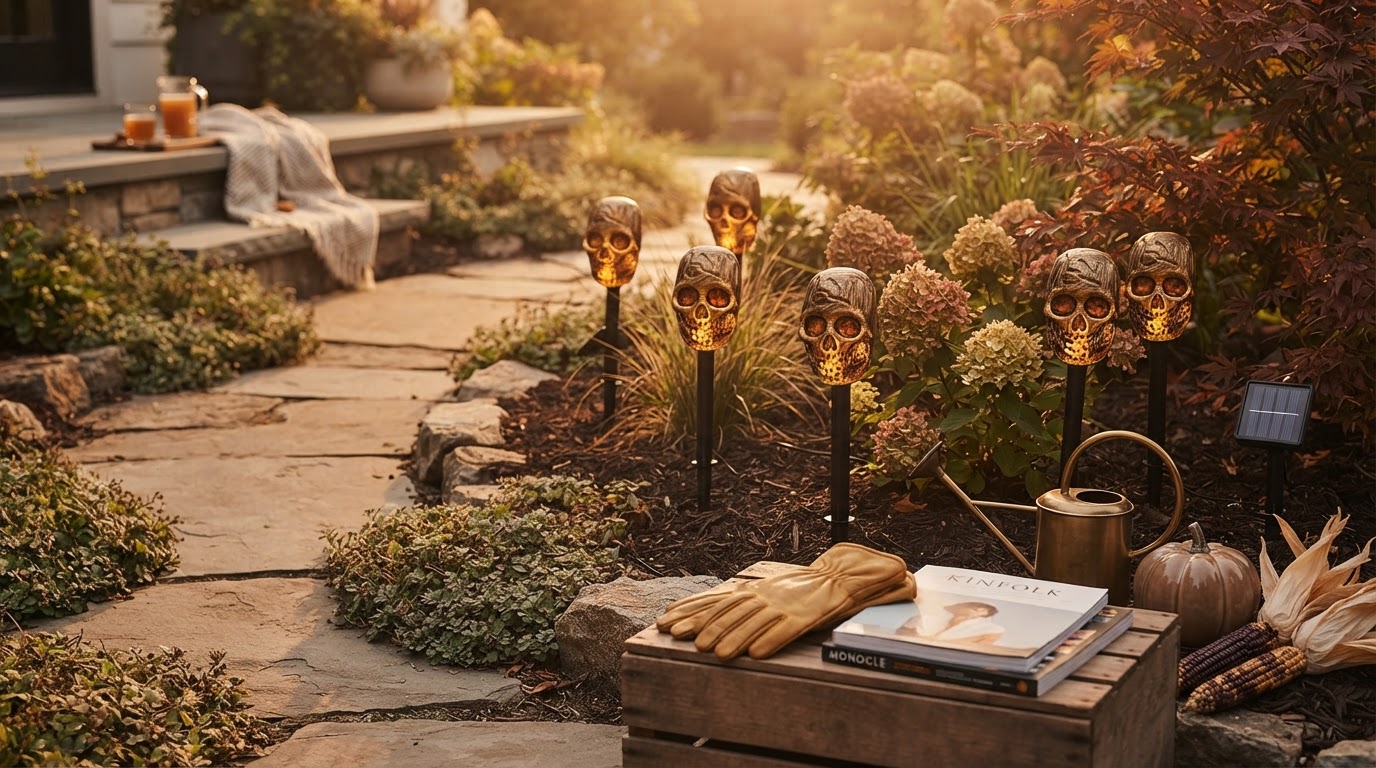
Optimizing Landscapes with Solar Skull Stakes Lighting
 Maya ChenContributing Editor
September 21, 2026. This analysis evaluates the technical viability and aesthetic integration of LED skull landscape lighting within residential garden designs. It serves as a resource for homeowners seeking to balance thematic seasonal decor with sustainable energy practices.
The Limitations of Conventional Seasonal Lighting
The conventional wisdom says that seasonal outdoor lighting must be a compromise between high energy consumption and poor durability. Most consumers accept that temporary installations will involve a tangle of extension cords and a noticeable spike in the utility bill. However, when we examine the efficiency of modern diodes, this trade-off appears increasingly unnecessary. According to Christmas Central, energy-efficient LED lights, such as those found in their LED Lighted Skull & Hands Outdoor Halloween Decoration, are designed to enhance nighttime visibility while minimizing power draw. Yet, even with LED efficiency, the reliance on "black wire" tethered systems creates a physical hazard in the landscape and limits placement to the proximity of an outlet. This tethering is a significant design flaw for those managing larger properties or complex garden beds where outdoor halloween skull lights need to be distributed evenly rather than clustered near a porch. Furthermore, the labor involved in hiding cables often outweighs the visual benefit of the display. Homeowners frequently resort to makeshift solutions, but as documented by Pinterest community contributors, attempting to hack a solar yard light into a creepy skull yard light for around $10 often results in a product that lacks the weatherproofing necessary for a full autumnal season. The failure rate of these DIY modifications suggests that a purpose-built, integrated solar solution is not just a luxury, but a requirement for reliable performance.
Technical Advantages of Solar Skull Stakes
Solar Skull Stakes address the primary failure points of both DIY projects and corded commercial displays by integrating the power source directly into the mounting hardware. This eliminates the voltage drop issues associated with long runs of thin-gauge wire and removes the tripping hazards inherent in led skull pathway lights. The engineering focus here is on the autonomy of the unit; each stake operates as an independent power plant, collecting photons during peak daylight hours to energize internal batteries. This decentralized approach means that a single obscured panel does not darken the entire display—a common frustration with series-wired solar powered skull path markers. Run the math: a typical corded display might draw 40 to 100 watts depending on the bulb count and type. Over a 31-day period, that is a measurable, if modest, cost. In contrast, Solar Skull Stakes operate at a net-zero energy cost post-purchase. The durability of the stake itself is also a critical factor. Unlike flimsy plastic alternatives that fracture during installation in compacted soil, these units are designed for repeated seasonal deployment. By utilizing high-output LEDs specifically tuned for the translucent resin of the skull, the light dispersion is more uniform than the harsh, directional beam of a standard spotlight. This creates a diffused glow that defines the garden’s perimeter without contributing to light pollution or causing glare that obscures other skeleton head garden stakes solar positioned further down the line.
Evaluating Landscape Lighting Performance
Here’s the part nobody talks about: most landscape lighting is purchased based on how it looks in a box, not how it performs after three weeks of rain and leaf fall. When selecting LED skull landscape lighting, the decision should be based on a framework of longevity and lux output rather than just the initial price point. A high-quality stake must maintain its structural integrity against wind loads and soil moisture. I’ll change my mind when I see a corded system that can be installed in under five minutes across a half-acre lot without a single tool, but until then, the efficiency of solar stakes remains the superior choice for modern residential applications. To ensure your lighting setup meets professional standards, consider the following technical checklist:
- Verify the IP (Ingress Protection) rating to ensure the electronics are sealed against heavy rain and morning dew.
- Assess the solar panel surface area relative to the LED count to ensure the battery can reach a full charge even on overcast days.
- Map the placement of led skull pathway lights to ensure they receive at least six hours of unobstructed sunlight.
- Check the stake material for UV resistance to prevent the resin from yellowing or becoming brittle over multiple seasons.
- Evaluate the color temperature of the LED; a cool white may look surgical, while a warm white or themed orange provides better atmospheric depth for skeleton head garden stakes solar applications.