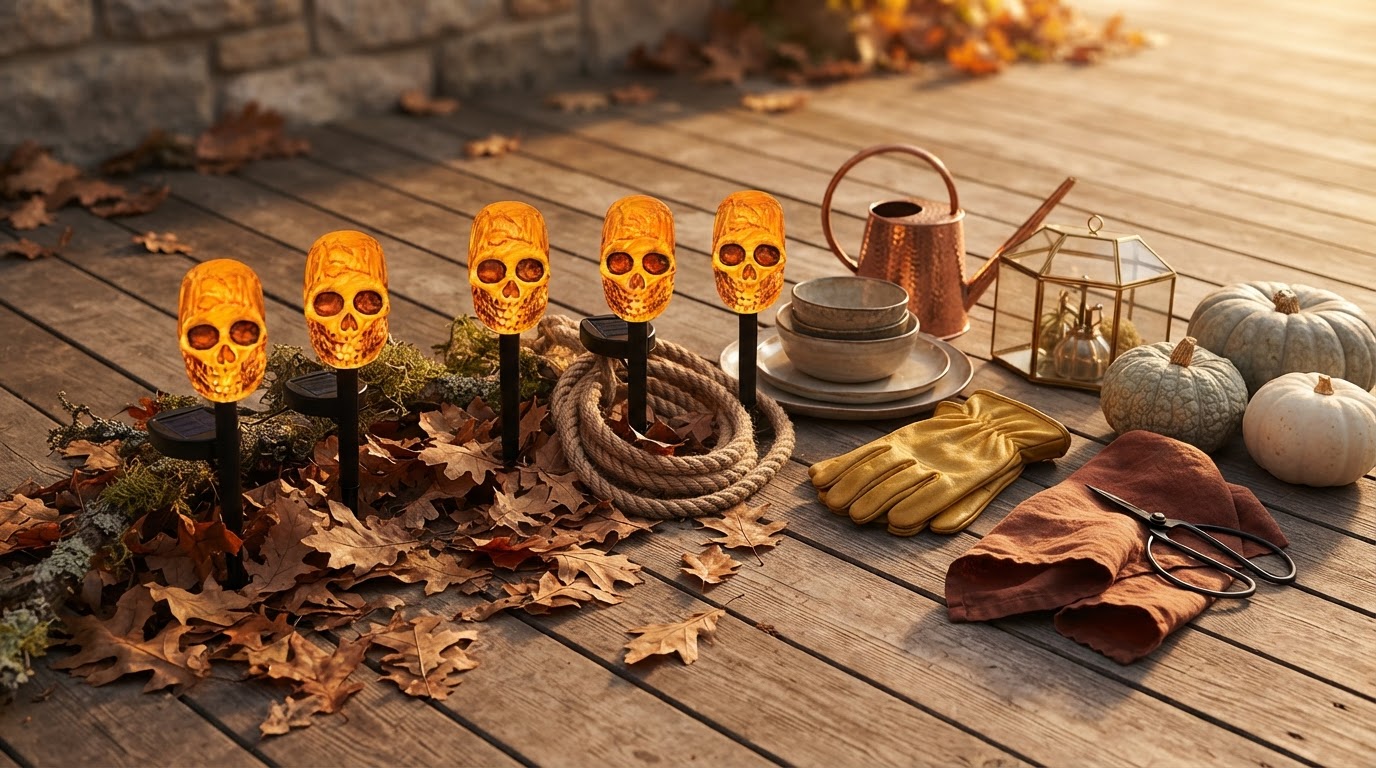
Solar Skull Stakes for High-Efficiency Spooky Yard Lighting
 Maya ChenContributing Editor
October 21, 2026. This evaluation analyzes the efficiency and durability of Solar Skull Stakes compared to traditional wired seasonal lighting. It is intended for homeowners seeking permanent, low-maintenance decorative solutions for their outdoor spaces.
The Failure of Traditional Seasonal Lighting
The conventional wisdom says that for a yard to achieve a truly haunting aesthetic, one must tolerate a web of extension cords and the inevitable spike in the utility bill. This consensus ignores the logistical reality of modern landscape management. Traditional plug-in systems are notoriously prone to moisture ingress at the connection points, leading to tripped GFCI outlets and dark displays mid-season. Furthermore, the labor involved in burying cables for [scary solar walkway markers](/blog/scary-solar-walkway-markers) or temporary [light up skulls for yard](/blog/light-up-skulls-for-yard) displays often outweighs the visual payoff. According to a report by Sheowncom on Facebook, many consumers are shifting toward solar-powered garden lights to avoid these setup hurdles, specifically citing the convenience of "creepy-cool" glows that require zero manual activation. However, the market is flooded with low-quality plastics that degrade under UV exposure within a single season. Most buyers fail to account for the lumen depreciation in cheap LEDs, resulting in a glow that fades to invisibility before Halloween night even arrives. Run the math: a standard 40-watt incandescent string light used for six hours a day over a month adds unnecessary costs and carbon, whereas a localized solar cell captures ambient energy that would otherwise be wasted on a lawn. The problem isn't the desire for a spooky yard; it's the inefficient delivery mechanism we've accepted as the standard.
Engineering the Solar Skull Stakes Advantage
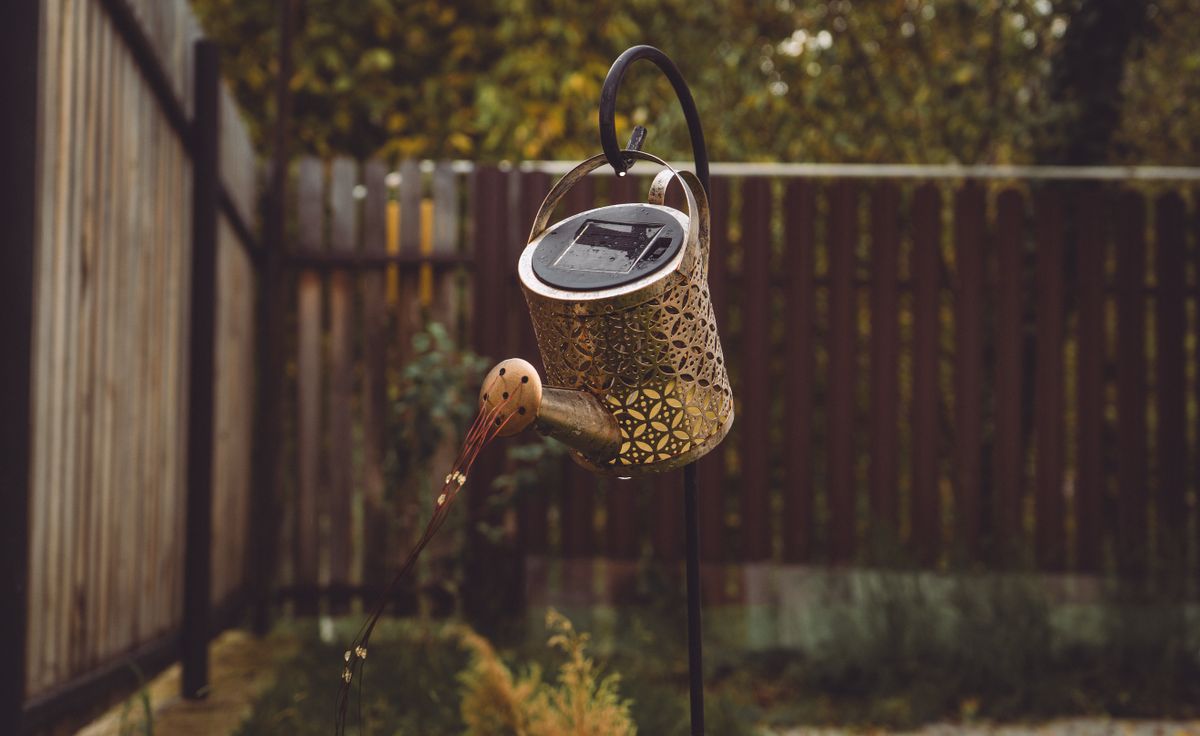
Photo by Gurgenidze G on Pexels
Solar Skull Stakes address the mechanical and electrical failures of their predecessors by integrating the power source directly into the fixture. Instead of relying on a central transformer, each stake operates as an autonomous unit. This decentralization ensures that if one unit is shaded by a shrub, the rest of the [outdoor solar skull lights](/blog/outdoor-solar-skull-lights) in the sequence remain fully operational. The hardware relies on polycrystalline solar panels paired with internal rechargeable batteries, designed to convert daylight into a sustained 6-to-8-hour discharge cycle. Here's the part nobody talks about: the durability of the stake itself. While many competitors use thin-walled PVC that snaps in frozen soil, Solar Skull Stakes are engineered for ground stability. They provide the necessary height to clear grass lines, ensuring the light dispersion isn't muffled by late-autumn growth. This is critical when setting up [creepy outdoor solar lighting](/blog/creepy-outdoor-solar-lighting) where shadows are just as important as the light itself. By utilizing high-impact resins, these stakes resist the yellowing and brittleness typically seen in products found on Etsy, where some "glow-in-the-dark" alternatives priced at $34.00 to $66.59 may rely on phosphorescent paint rather than active LED illumination. Solar Skull Stakes utilize active circuitry to ensure the "eyes" or internal cavities of the skull maintain a consistent Kelvin temperature, providing a crisp, thematic light that doesn't flicker or dim prematurely. This technical consistency is what separates a professional-grade landscape feature from a disposable holiday novelty.
Criteria for Professional Halloween Lighting
When transitioning from temporary decorations to a robust solar-powered system, the decision should be based on hardware specifications rather than just aesthetic appeal. A reliable solar stake must meet specific thresholds for weather resistance and energy density. If a product cannot survive a heavy rainstorm or a frost cycle, it has no place in a serious outdoor display. Before finalizing a layout for your light up skulls for yard, evaluate the hardware against this performance framework:
- Panel Orientation: Ensure the integrated solar cells are positioned to receive at least 6 hours of unobstructed sunlight; fixed-angle panels on Solar Skull Stakes are optimized for northern hemisphere autumn sun arcs.
- Battery Chemistry: Verify the use of Ni-MH or Li-ion rechargeable cells that can handle hundreds of charge-discharge cycles without significant memory effect.
- IP Rating: Look for a minimum of IP44 weatherproofing to ensure protection against splashing water and solid objects larger than 1mm.
- Lumen Output: The light should be sufficient to define the skull’s features without washing out the surrounding shadows, maintaining the intended "spooky" atmosphere.
- Material Density: The stake must be composed of UV-stabilized ABS or similar high-impact polymers to prevent snapping during installation in compacted soil.
Sources
- Solar Outdoor Skull - Etsy
- Solar Powered Skeleton Skull Pathway Lights - YouTube
- Light up your yard with spooky skull vibes This Halloween skull solar ...