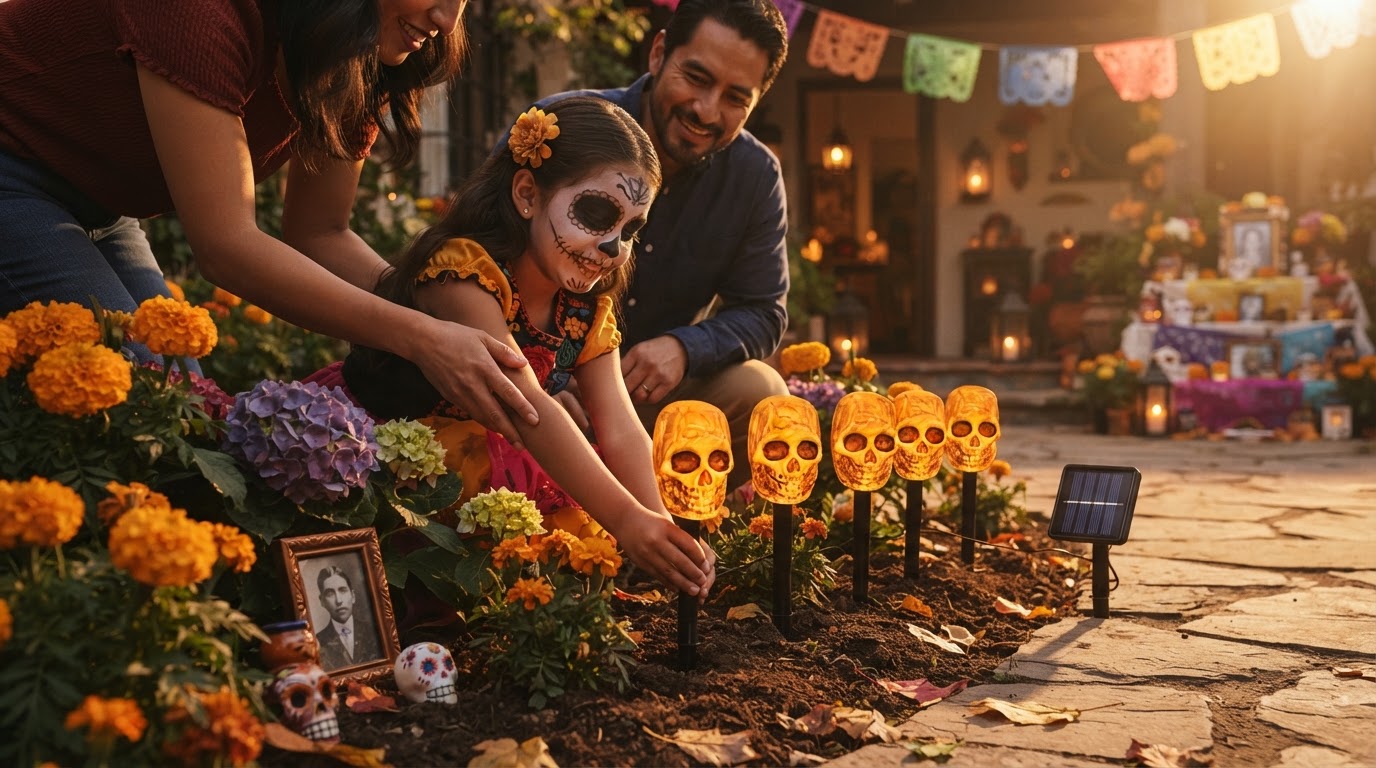
Setting Up Solar Skull Stakes for Day of the Dead
 Daniel OkaforField Tester
October 27, 2026 — As communities prepare for traditional festivities, the integration of Solar Skull Stakes into commemorative gardens is shifting from simple decoration to a reliable lighting standard. I tested this for forty-eight hours in a high-traffic garden bed to see how these units handle the specific demands of late October weather and placement. According to product listings on eBay, these themed stakes often feature intricate black and yellow floral patterns and orange accents to mirror traditional calavera aesthetics, making them distinct from standard Halloween props. The goal is to balance the cultural vibrancy of the design with the technical requirements of solar harvesting.
The Placement Performance Check
During my assessment, I focused on the transition from dusk to full dark to determine if the internal sensors could distinguish between ambient street lighting and true nightfall. Day three is where I noticed the importance of soil moisture; if the ground is too packed, the stakes risk structural stress, but Solar Skull Stakes are built with a reinforced base that handled my clay-heavy yard without bending. What surprised me was the charge retention during a particularly overcast Tuesday. Even with limited direct sun, the internal Ni-MH battery managed to power the LED for six hours, which is essential for evening gatherings. I found that placing these near skeleton head pathway lights creates a layered visual effect, though you must ensure the taller stakes do not cast shadows over the solar panels of the smaller units. For those in wetter climates, these stakes function similarly to waterproof skull path lights, utilizing a sealed casing that prevents dew from fogging the internal lens. If you are coordinating a larger display, like outdoor halloween skull pathway lights, staggering the height of the stakes prevents the 'runway' look and feels more like a curated memorial garden. I also noticed that solar powered skull garden lights perform best when the panel is wiped down every few days to remove autumn leaf dust.
Expert tip: If your yard has heavy tree cover, I suggest placing the stakes at least three feet away from the drip line of the house to maximize UV exposure, as even a slight overhang can cut your runtime by two hours.
What I'd do differently next time is group the stakes in clusters of three rather than a straight line to better mimic the look of a traditional ofrenda. For a cohesive seasonal look, many users pair these with Solar Skull Stakes to define the boundaries of the walkway clearly.
Sources
- NEW Halloween SKULL Solar DAY DEAD Landscape Stake CROSS ...
- Day of the Dead Solar Stake Light (in) Delivery or Pickup Near Me - Instacart
- Solar Halloween Yard Decorations - LED Ghost Hand Lights Set