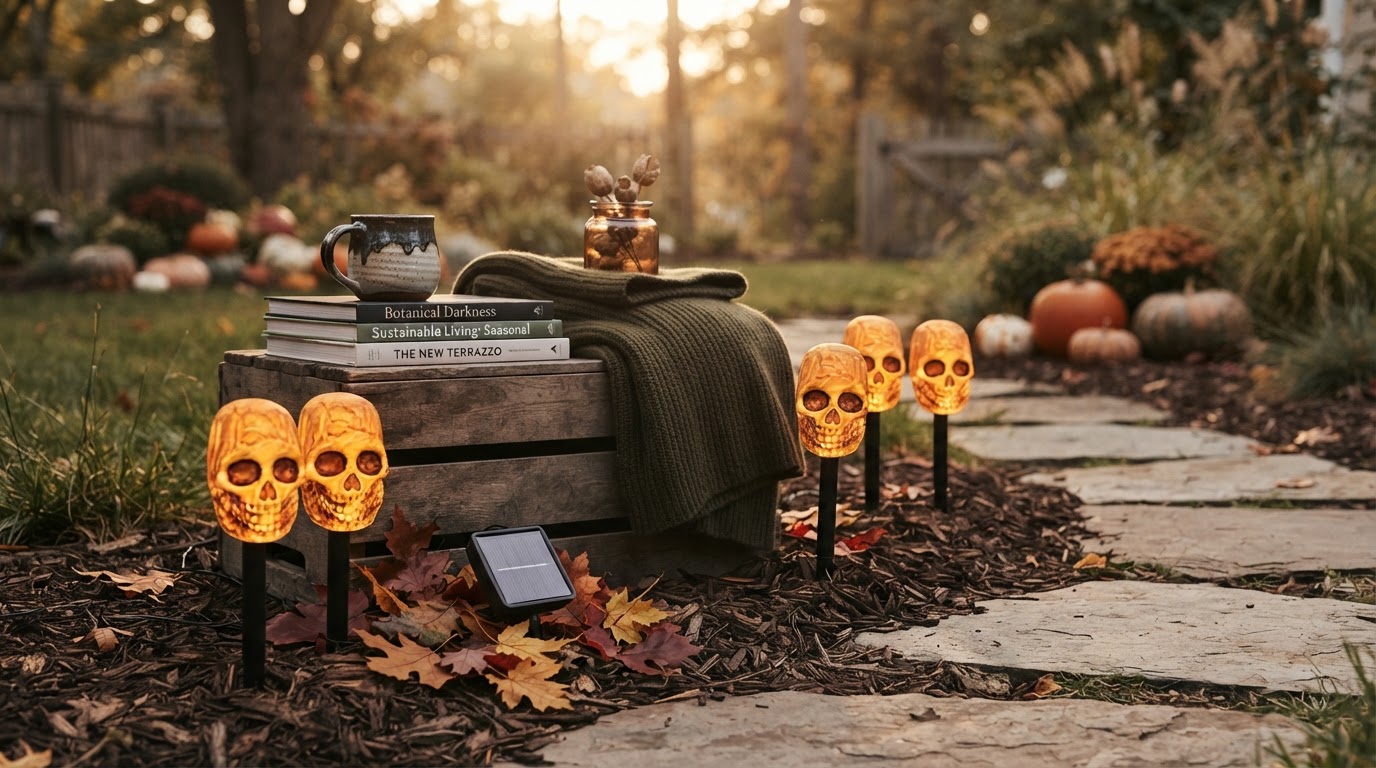
Solar Skull Stakes for Sustainable Pathway Design
 Priya RamanSenior Analyst
October 8, 2026. This technical analysis explores the implementation of Solar Skull Stakes as a high-efficiency solution for seasonal perimeter lighting. It serves homeowners and professional decorators seeking to balance thematic intensity with operational sustainability.
Effective seasonal lighting design can be evaluated through a two-axis matrix: atmospheric impact and logistical complexity. On the atmospheric axis, lighting must transition from functional illumination to narrative-driven shadow work. On the logistical axis, the shift toward autonomous energy sources eliminates the hazards of high-voltage cabling in high-traffic areas. Think of it as a matrix of visibility versus maintenance; the ideal solution maximizes the former while minimizing the latter. When selecting spooky solar walkway lights, the primary challenge involves maintaining consistent luminosity across varying weather conditions without increasing the property's carbon footprint. According to Balsam Hill, sustainable solar lights serve as an effective Halloween décor alternative because they harness clean, renewable energy, converting solar radiation into electrical power to illuminate displays without the need for traditional grid consumption. This transition to renewable energy is not merely a trend but a functional necessity for large-scale outdoor installations where cord management becomes a safety liability.
Solar Skull Stakes address these specific requirements by integrating photovoltaic cells directly into the structural stake, providing a self-contained power loop. Unlike DIY solutions, such as the method described by JoyfullySo which suggests using $2 plastic pumpkins and a solar light to create Halloween themed walkway lighting, Solar Skull Stakes are engineered for architectural consistency. These units utilize high-efficiency LED arrays housed within weather-resistant resin skull housings. By prioritizing skeleton head pathway lights, decorators can achieve a uniform color temperature that avoids the erratic flickering associated with low-quality consumer electronics. The integration of light up skulls for yard allows for a decentralized power grid across the landscape, meaning a single shadow or obstruction does not compromise the entire lighting sequence. This modularity is essential when deploying scary solar walkway markers along winding paths or uneven terrain, as each stake operates independently based on its own solar absorption. The decision rule is clear: for high-traffic zones, integrated solar units provide superior durability and safety compared to tethered systems or improvised craft projects.
Selecting the appropriate lighting density requires a systematic approach to spatial planning. Once you see it this way, the placement of outdoor halloween skull pathway lights becomes a matter of calculating the effective radius of each LED against the ambient darkness of the environment. A successful installation requires a decision framework that accounts for both aesthetic goals and technical constraints. Before finalizing a layout, evaluate the following criteria:
- Direct Sunlight Exposure: Ensure each stake receives a minimum of six hours of unobstructed UV exposure to guarantee a full eight-hour discharge cycle.
- Soil Density and Depth: Verify that the ground can accommodate a 6-to-8 inch stake depth to maintain vertical alignment against wind resistance.
- Lumen Output Consistency: Standardize the distance between stakes to prevent dark spots that could lead to tripping hazards in pedestrian areas.
- Weatherproofing Ratings: Confirm that the internal circuitry is sealed against moisture ingress, particularly for late-October climates prone to frost or rain.
- Color Rendering Index (CRI): Match the light temperature across all units to ensure the skull features are rendered with consistent detail.
Shop Solar Skull Stakes here: https://solyraskullstake.com
Sources
Photo by Marcelo Chagas on Pexels
- Solar Halloween Pathway Lights - Balsam Hill
- Sustainable Solar Lights as Halloween Décor - Balsam Hill
- Use the $2 plastic pumpkins and a solar light to create Halloween ...