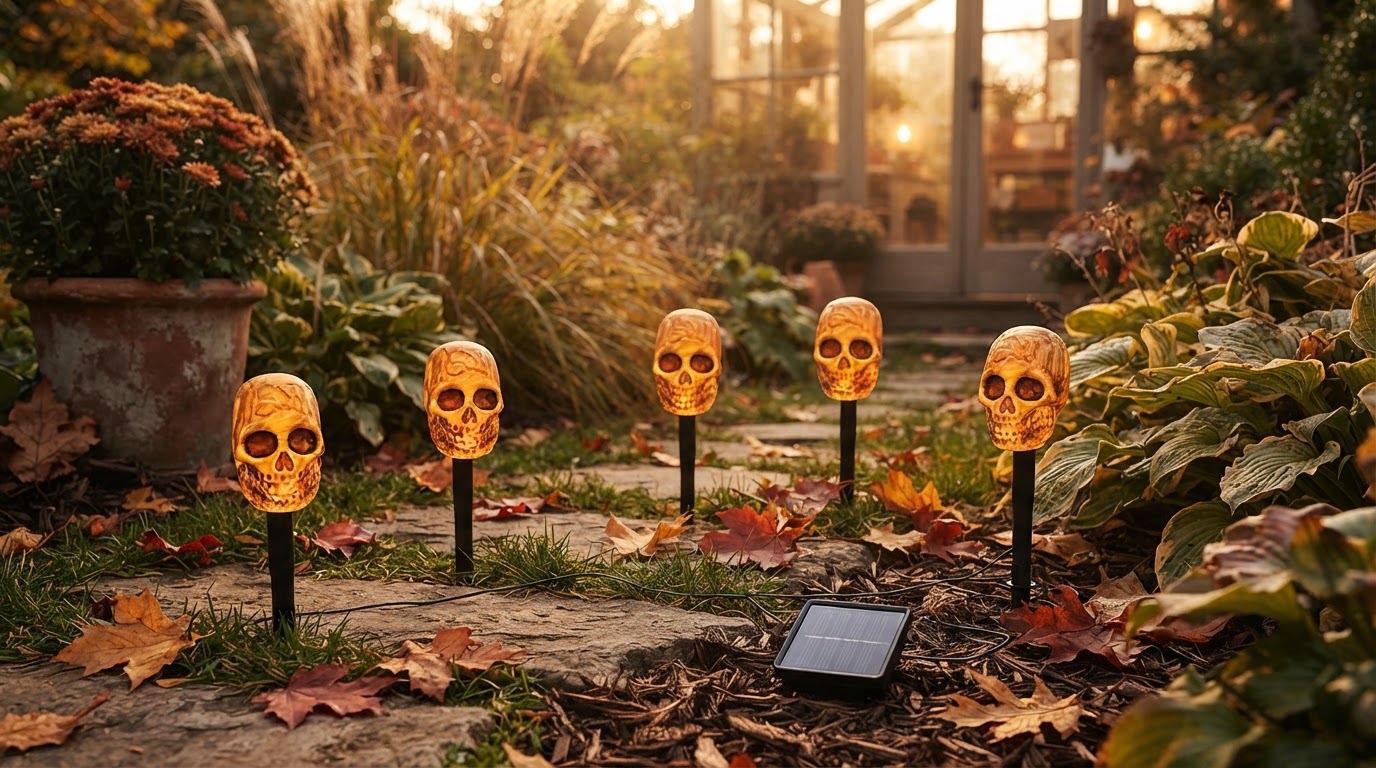
Solar Skull Stakes for Sustainable Seasonal Lighting
 Maya ChenContributing Editor
October 31, 2026. This analysis examines the operational efficiency and deployment logistics of Solar Skull Stakes for residential outdoor displays. It is written for property owners seeking to transition from tethered electrical systems to autonomous photovoltaic garden lighting.
The Inefficiency of Traditional Seasonal Power Grids
The conventional wisdom says that high-impact holiday lighting requires a complex network of extension cords and outdoor timers. This consensus ignores the significant friction of installation and the recurring energy overhead inherent in resistive heating of older incandescent systems. According to LTD Commodities, the shift toward standalone solar skull designs is driven by a need for a festive fright that doesn't require proximity to a GFI outlet. When homeowners rely on traditional setups, they often face a logistical bottleneck: the number of decorations is limited by the number of available sockets. Furthermore, the environmental impact of running thousands of watts for a month-long display is rarely factored into the cost of the "holiday spirit."
Here's the part nobody talks about: the failure rate of outdoor extension cords in wet conditions. Even when using waterproof skull path lights, the weak point in a traditional system is rarely the fixture itself, but the connection points between cords. By eliminating these physical links, Solar Skull Stakes remove the most common point of failure in seasonal lighting. While some hobbyists attempt a DIY approach using Dollar Tree materials, these often lack the necessary battery capacity for sustained output. The industry is moving toward integrated units that manage their own power budget, yet many consumers still cling to the belief that "plug-in is brighter." Run the math: a modern LED driven by a lithium-ion cell can achieve comparable lumen output for the specific task of accent lighting without the $40 surge in your November utility bill.
Technical Integration of Solar Skull Stakes
Transitioning to Solar Skull Stakes requires a shift in how a yard is mapped for illumination. Unlike outdoor halloween skull pathway lights that rely on a central transformer, solar units are geographically independent. This independence allows for placement in areas previously considered "dead zones," such as the far perimeter of a property or deep within garden beds where cabling would be invasive. Data from eBay listings for 8-piece solar skull stake sets indicates that these units typically require a charging window of 6-8 hours to provide 10-12 hours of illumination. This 1:1.5 charge-to-discharge ratio is the benchmark for high-performance seasonal gear.
To maximize this efficiency, users must focus on optimizing solar skull stakes for high-performance yards by ensuring unobstructed solar access during peak UV hours. The internal hardware usually consists of a small polycrystalline panel, a rechargeable Ni-MH or Li-ion battery, and a light-sensitive resistor that automates the dusk-to-dawn cycle. This automation is a critical upgrade over manual switching. When evaluating these as skeleton head pathway lights, the lack of wiring allows for rapid reconfiguration. If a specific area of the yard is shaded by autumn leaf fall, the stakes can be moved in seconds, a task that would take an hour with a wired daisy-chain system. For those utilizing these units as day of the dead garden stakes solar, the portability ensures that the tribute remains brightly lit regardless of the specific garden layout for the year. The black and white assorted designs mentioned by retailers like Family Dollar highlight the aesthetic flexibility, but the real value lies in the autonomous circuitry that manages energy consumption throughout the night, dimming slightly as the battery depletes to ensure the light lasts until sunrise.
Implementation Framework for Solar Deployment
Deploying Solar Skull Stakes effectively requires more than just pushing a spike into the dirt. To ensure the system performs at the 10-hour mark consistently, a structured approach to placement and maintenance is mandatory. I'll change my mind about the superiority of wired systems only when they can match the zero-carbon footprint and zero-labor maintenance of a well-placed solar array.
- Conduct a site survey between 10:00 AM and 2:00 PM to identify areas with maximum solar exposure.
- Clear all organic debris from the photovoltaic panel surfaces weekly to prevent charging degradation.
- Verify the ground moisture levels; while the stakes are designed for outdoor use, soil that is too hard can damage the plastic stake during insertion.
- Group stakes in clusters of three or five to create a depth-of-field effect that compensates for the lower lumen output compared to floodlights.
- Store units in a dry, dark environment during the off-season with the batteries removed to prevent terminal corrosion.
- Test the light-sensing trigger by covering the panel manually before final placement to ensure the internal circuit is active.